

Transportador de tornillo frente a transportador de vacío: ¿Cuál es mejor para las líneas de extrusión de polvo?
Release time: 2026-04-08
Tabla de contenido
In the highly competitive world of plastics, food processing, and pharmaceutical manufacturing, the efficiency of your powder extrusion line is directly tied to how effectively you handle your raw materials. A seamless, continuous, and contamination-free feed is paramount. When designing or upgrading a facility, engineers frequently face a critical decision regarding powder handling systems for extrusion lines: should they opt for a traditional mechanical screw conveyor or invest in a modern pneumatic vacuum conveyor?
Both technologies have their distinct merits, but choosing the wrong system can lead to material degradation, frequent downtime, excessive dust generation, and inconsistent extrusion quality. As an industry pioneer, Awesome has analyzed countless production setups to help manufacturers optimize their processes. In this comprehensive guide, we will compare screw conveyors and vacuum conveyors across various parameters to help you determine which is the optimal choice for your powder extrusion applications.
Understanding the Contenders
Before diving into a direct comparison, it is essential to understand the fundamental operating principles of both conveying methods.
What is a Screw Conveyor?
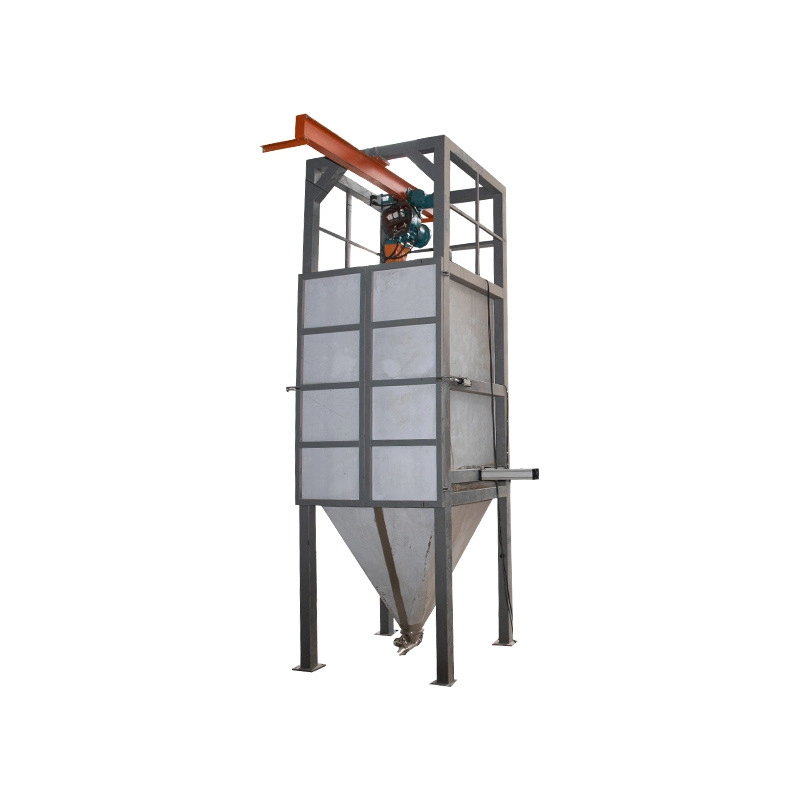
A screw conveyor (often referred to as an auger conveyor) is a mechanical system that utilizes a rotating helical screw blade within a tube or trough to move liquid or granular materials. As the screw rotates, the material is pushed forward along the length of the casing.
El mechanical screw conveyor advantages primarily lie in their simplicity, durability, and ability to move heavy, dense, or semi-moist materials over short, straight distances. They are a staple in heavy industries and are known for providing a consistent volumetric feed rate, which is often required right above the extruder hopper.
What is a Vacuum Conveyor?
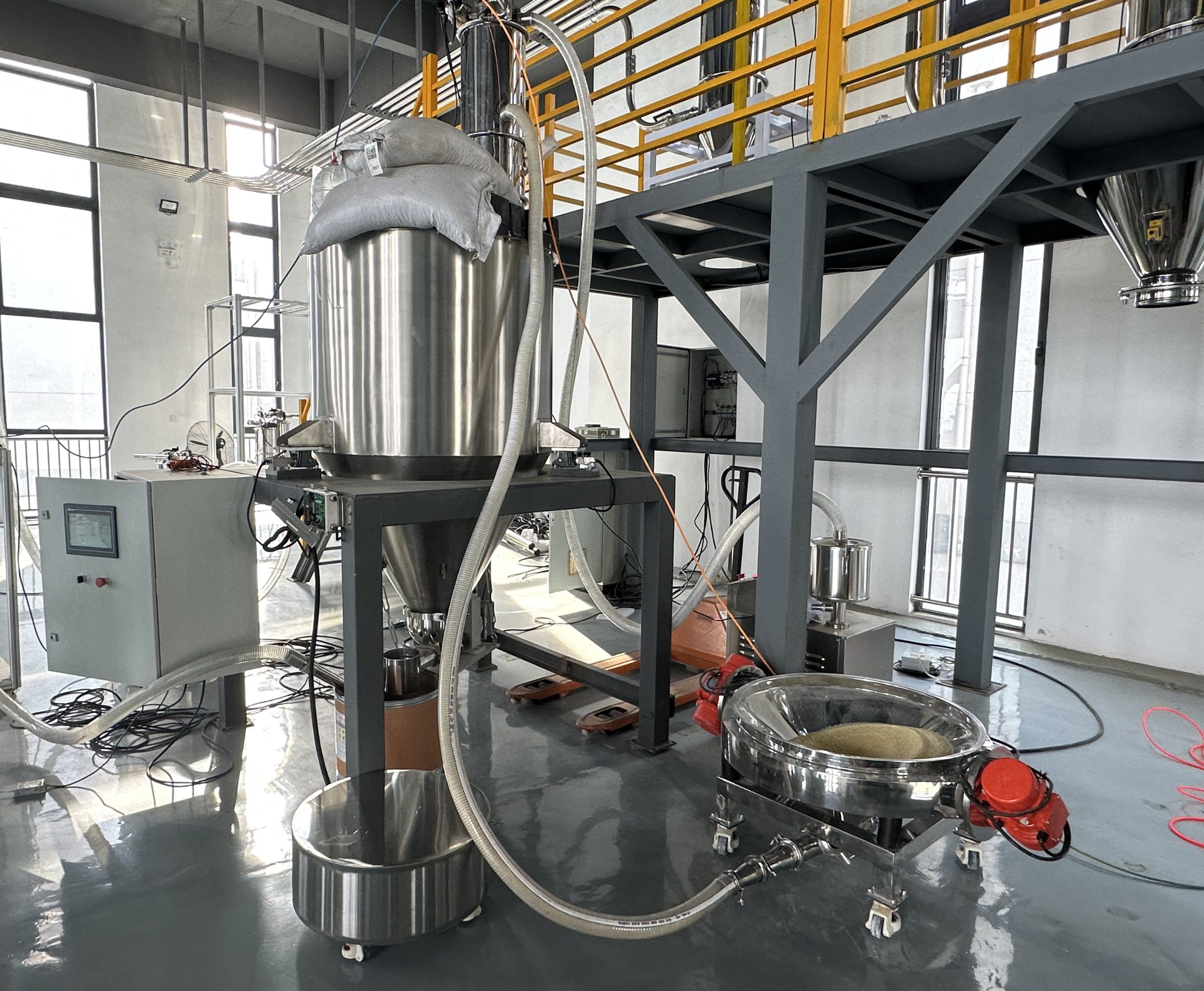
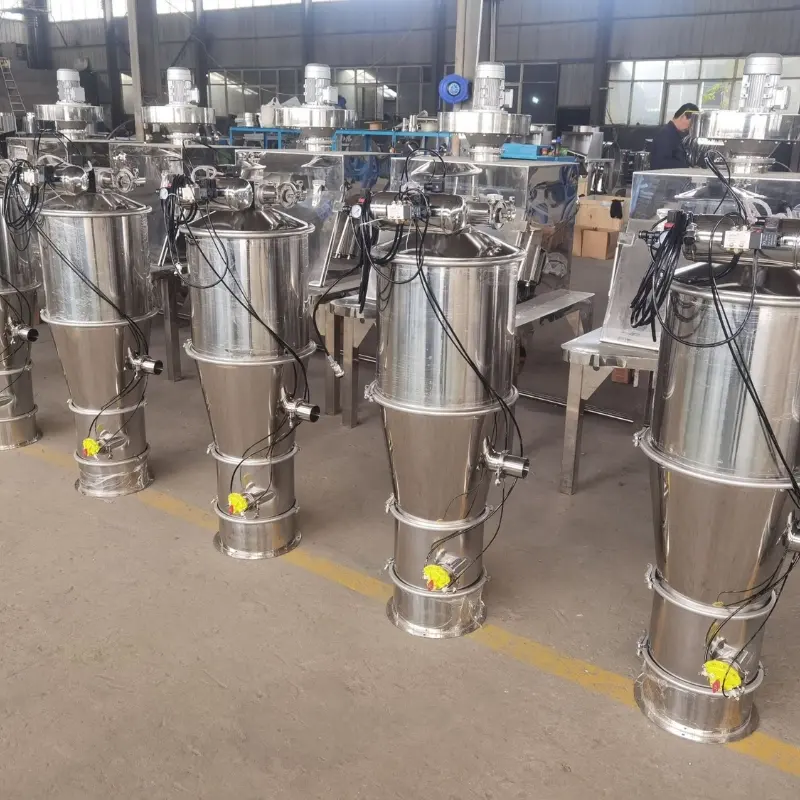
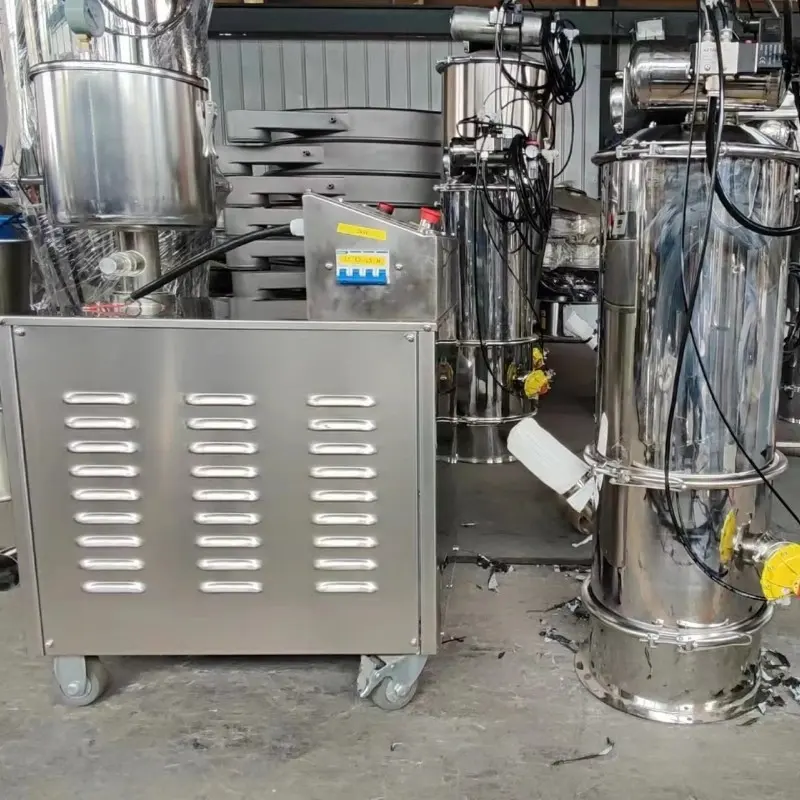
A vacuum conveyor relies on pneumatic technology. It uses a vacuum pump to generate negative pressure within an enclosed pipeline, effectively sucking the powder or bulk material from a source point and transporting it to a receiving vessel (such as an extruder hopper).
Modern manufacturing increasingly favors pneumatic vacuum conveying equipment because it offers an entirely closed system. This is crucial for maintaining a clean factory environment and protecting both the product from external contamination and the operators from hazardous dust.
Head-to-Head Comparison for Extrusion Lines
To determine which system is better for your specific powder extrusion line, we must evaluate them across several critical production factors.
1. Material Integrity and Degradation
Powders used in extrusion—whether they are polymer blends, pharmaceutical compounds, or food ingredients—are often sensitive to friction and mechanical stress.
Screw conveyors apply direct mechanical force to the powder. As the material gets squeezed between the rotating screw flight and the casing wall, fragile particles can be crushed, leading to unwanted fines or melting of heat-sensitive polymers. In contrast, vacuum conveyors suspend the powder in a stream of air. This gentle method significantly reduces friction and impact, making it far superior for preventing powder segregation during transport and preserving the integrity of fragile or blended particles before they enter the extruder.
2. Hygiene, Dust Control, and Safety
Dust mitigation is a massive concern in powder handling. Airborne dust not only poses severe respiratory hazards to workers but can also create an explosive environment (combustible dust hazards).
Because screw conveyors rely on seals and bearings that can wear out over time, there is a higher risk of powder leakage. Furthermore, cleaning a screw conveyor requires significant downtime to dismantle the heavy auger. Conversely, vacuum conveyors operate under negative pressure. If a leak occurs in the pipeline, ambient air is drawn in, meaning no powder escapes into the facility. This inherent design makes them the ultimate dust-free powder transfer solutions. Additionally, they are much easier to clean in place (CIP) or dismantle rapidly without tools, positioning them as the preferred sanitary conveying systems for food-grade powders and medical-grade polymers.
3. Routing Flexibility and Footprint
Factory floor space is at a premium. Extrusion lines often require raw materials to be transported from ground-level bags or silos up to elevated extruder hoppers.
Screw conveyors are rigid. They typically operate in straight lines and can only handle slight inclines efficiently. If your layout requires multiple turns or steep vertical lifts, a single screw conveyor will not suffice; you would need a complex network of multiple conveyors, increasing maintenance points and footprint. Vacuum conveyors use flexible hoses or standardized piping that can easily be routed around existing equipment, through tight spaces, and vertically straight up to the extruder. This flexibility makes them highly adaptable to complex factory layouts.
4. Throughput Capacity and Distance
For extremely high-volume, continuous heavy-duty applications over short, horizontal distances, screw conveyors can be incredibly efficient and cost-effective. They can physically push large volumes of dense material relentlessly.
However, for most modern extrusion lines requiring precision feeding over moderate to long distances, vacuum systems shine. While they may consume more energy to generate the vacuum compared to turning a motor, the overall operational efficiency, lack of material loss, and reduced downtime often result in a better long-term ROI for bulk material handling in extrusion.
The Verdict: Which is Better?
Ultimately, choosing between vacuum and screw conveyors comes down to your specific material characteristics, facility layout, and hygiene requirements.
Choose a screw conveyor if:
- You are handling heavy, non-friable, or abrasive materials.
- The conveying distance is short and perfectly straight.
- Your budget for initial capital expenditure is strictly limited.
- Dust control and cross-contamination are not primary concerns.
Choose a vacuum conveyor if:
- You are processing fine powders, mixed blends, or fragile materials that cannot tolerate degradation.
- You require a completely dust-free, hygienic environment.
- Your factory layout requires vertical lifts and complex routing.
- You need quick changeovers and easy cleaning between different color batches or material recipes.
For the vast majority of modern powder extrusion lines—where product quality, worker safety, and precise, clean operation are paramount—the transportador de vacío emerges as the superior choice.
En Impresionante, we understand that no two production lines are exactly alike. Whether you are leaning towards the mechanical reliability of a screw system or the advanced, clean operation of a vacuum system, our engineering team is ready to help you design a bespoke conveying solution that maximizes your extrusion line’s efficiency and profitability.
Frequently Asked Questions (FAQs)
Q1: Can a vacuum conveyor handle highly abrasive powders for extrusion?
A: Yes, but it requires careful engineering. While vacuum systems are gentle, abrasive powders moving at high velocities can wear down standard pipelines and bends. To solve this, systems can be fitted with reinforced hosing and specialized ceramic-lined or wear-resistant elbows and designed to operate at lower velocities (dense-phase conveying) to minimize wear on the equipment.
Q2: Will using a screw conveyor cause my mixed powder blends to unmix before extrusion?
A: It is a significant risk. The mechanical churning action of a screw conveyor can cause powders with different particle sizes or densities to separate (segregate) as they travel along the auger. If maintaining a strict homogeneous blend is critical for your extrusion recipe, a vacuum conveyor is generally recommended, as it moves the blend en masse, preserving the mixture.
Q3: How do I prevent powder from bridging or rat-holing in the extruder hopper regardless of the conveyor I use?
A: Bridging occurs when powder forms an arch over the hopper outlet, stopping the flow. Even with the best conveyor delivering the material, the hopper design matters. To prevent this, ensure your hopper has the correct wall angles based on the powder’s angle of repose. Additionally, you can integrate flow aids such as pneumatic vibrators, fluidization pads (aerators), or mechanical agitators directly into the hopper to maintain a steady, uninterrupted flow into the extruder screw.