



¿Qué es un sistema de transporte por vacío y cómo funciona?
Fecha de lanzamiento: 13 de mayo de 2026
Tabla de contenido
En los procesos industriales modernos, el traslado de materiales de forma eficiente, segura y limpia es fundamental. Ya sea que se trate de ingredientes farmacéuticos delicados o de productos alimenticios a granel, el método de transporte puede influir significativamente en la calidad del producto y la eficiencia operativa. Una de las soluciones más eficaces para el traslado de materiales secos a granel es el sistema de transporte por vacío. Pero, ¿qué es exactamente y cómo funciona?
Este artículo profundiza en la mecánica, los beneficios y las aplicaciones de estos sistemas, proporcionando una visión general completa para cualquier persona que busque optimizar sus procesos de manipulación de materiales.
Comprensión del transporte por vacío
En esencia, un sistema de transporte por vacío Es un método para transportar materiales secos a granel —como polvos, gránulos, escamas y pellets— de un punto a otro mediante succión. A diferencia de los sistemas de presión positiva que impulsan el material a través de una tubería, los sistemas de vacío utilizan presión negativa para aspirarlo. Esta diferencia fundamental ofrece varias ventajas importantes, especialmente al manipular materiales sensibles o peligrosos.
El elemento central del sistema es la bomba de vacío o soplador, que genera el flujo de aire necesario. Este flujo de aire crea un vacío en la tubería de transporte, extrayendo el material de una fuente, como un saco a granel, un silo o un depósito de pienso, y transportándolo a un destino, normalmente un recipiente receptor o un equipo de procesamiento.
Componentes básicos de un sistema de vacío
Una configuración típica consta de varios componentes clave que funcionan al unísono:
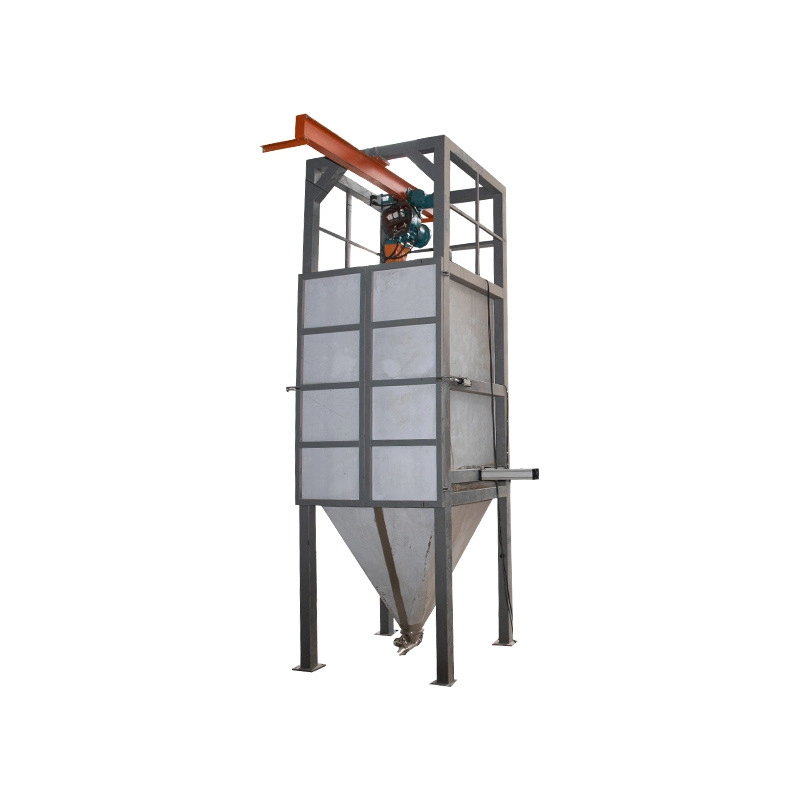
- Punto de recogida (Origen): Aquí es donde el material ingresa al sistema. Puede ser una simple varilla de succión que extrae el material de un tambor, un depósito de alimentación especializado o una estación de descarga integrada para sacos a granel. El diseño del punto de recogida es fundamental para garantizar un caudal de alimentación constante y controlado.
- Tubería de transporte: La red de tuberías o mangueras por la que circula el material. El diámetro y el trazado de la tubería se calculan cuidadosamente en función de las características del material y del caudal requerido.
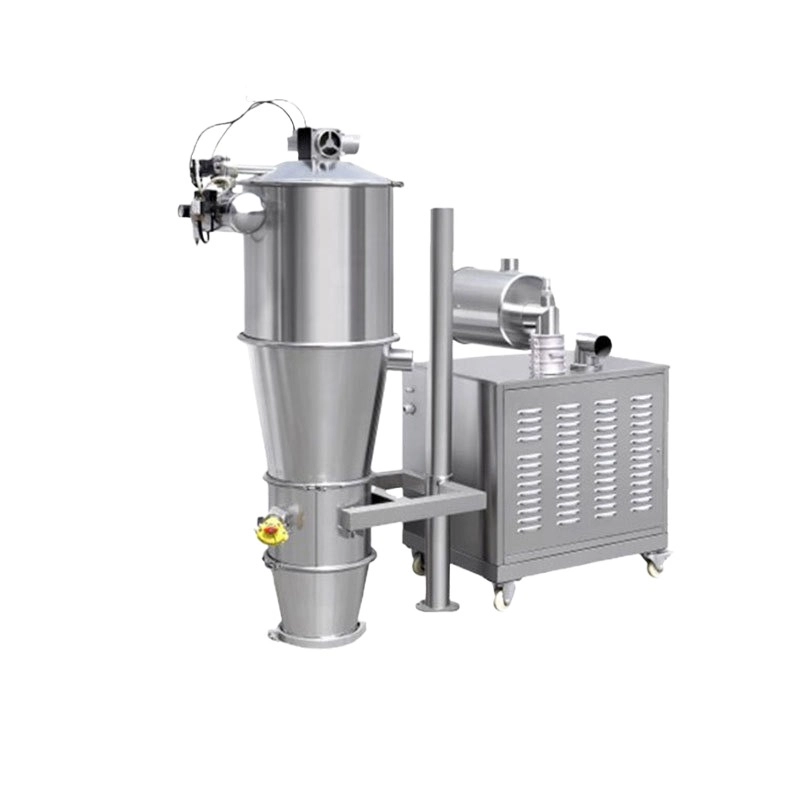
- Receptor de vacío (destino): El recipiente donde el material transportado se separa del aire de transporte.
- Sistema de filtración: Los filtros, ubicados dentro o junto al receptor de vacío, garantizan que el aire transportado esté limpio antes de llegar a la bomba de vacío y ser expulsado al ambiente. Esto es fundamental para prevenir daños en la bomba y mantener un espacio de trabajo libre de polvo.
- Fuente de vacío (bomba/soplador): El motor del sistema, responsable de generar la presión negativa necesaria para mover el aire y el material.
- Panel de control: Es el cerebro de la operación, encargado de gestionar la secuencia de las válvulas, controlar los niveles de presión y garantizar un funcionamiento seguro y eficiente.
Cómo funciona el proceso: una guía paso a paso
El funcionamiento de un sistema de transporte por vacío suele seguir un proceso cíclico, alternando entre fases de transporte y descarga.
- La fase de transporte: La bomba de vacío se activa, extrayendo el aire del depósito. Esto crea presión negativa, que impulsa el aire y el material desde el punto de recogida a través de la tubería de transporte. La mezcla de material y aire se dirige al depósito.
- Separación: A medida que la mezcla entra en el recipiente receptor, la disminución repentina de la velocidad del aire provoca que las partículas más pesadas del material caigan fuera de la corriente de aire y se depositen en el fondo del recipiente.
- Filtración: El aire más ligero y cargado de polvo es aspirado hacia arriba a través del sistema de filtración. Los filtros retienen las partículas finas, permitiendo que solo el aire limpio pase a la bomba de vacío.
- La fase de descarga: Una vez que el depósito está lleno o ha transcurrido un tiempo predeterminado, la bomba de vacío se detiene (o una válvula desvía el vacío). La válvula de descarga en la parte inferior del depósito se abre, permitiendo que el material acumulado caiga en el equipo de procesamiento inferior.
- Limpieza del filtro: Simultáneamente con la descarga, se suele dirigir un pulso de aire comprimido de vuelta a través de los filtros. Este “pulso inverso” desaloja el polvo acumulado, que cae en el flujo de descarga, manteniendo así los filtros limpios para el siguiente ciclo.
Este ciclo se repite continuamente, proporcionando un flujo constante y controlado de material.
Tipos de transporte por vacío
Según la naturaleza del material y los requisitos específicos de la aplicación, el transporte por vacío se puede clasificar en dos tipos principales: fase pobre (o fase diluida) y fase densa.
Transporte en fase pobre (fase diluida)
En el transporte en fase pobre, el material se encuentra suspendido en la corriente de aire. Requiere altas velocidades de aire y bajas presiones. Este método se utiliza generalmente para materiales no abrasivos, no frágiles y con una densidad aparente relativamente baja. Es una excelente opción para el transporte de materiales a distancias cortas y medias.
- Características: Funcionamiento a alta velocidad, baja presión, continuo o semicontinuo.
- Ideal para: Polvos ligeros, gránulos, harina, azúcar.
Transporte en fase densa
El transporte por fase densa mueve el material en bloques o en un lecho sólido, en lugar de suspenderlo en el aire. Esto requiere altos niveles de vacío y bajas velocidades del aire. Debido a que el material se mueve más lentamente, se reduce la degradación de partículas frágiles y el desgaste de la tubería al manipular materiales abrasivos.
- Características: Operación por lotes a baja velocidad y alto vacío.
- Ideal para: Productos frágiles (como granos de café o frutos secos), polvos abrasivos, mezclas que podrían segregarse en la fase de molienda lenta.
El papel de Transportadores de vacío para polvo
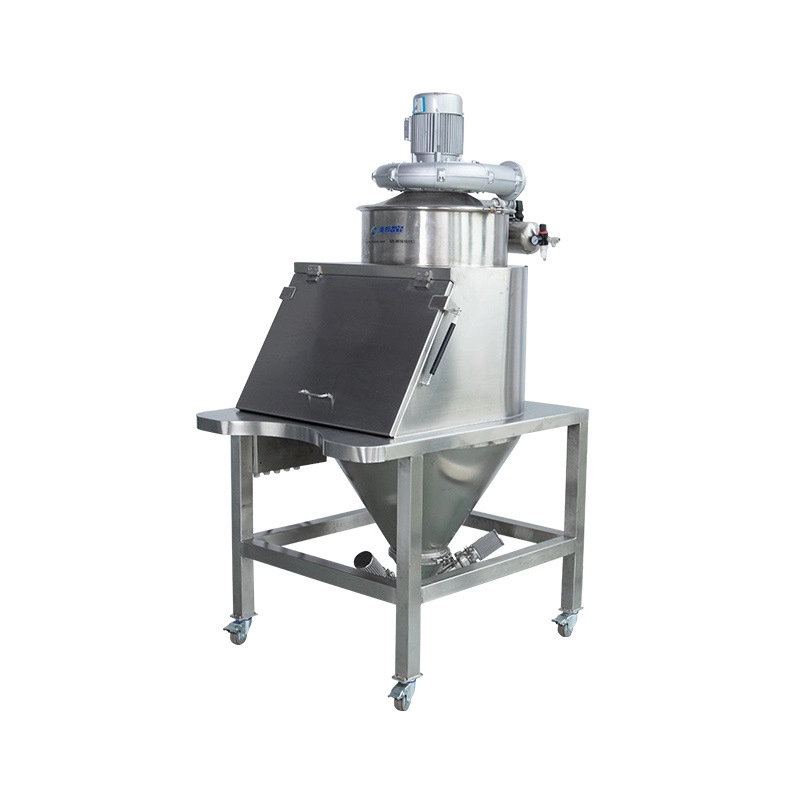
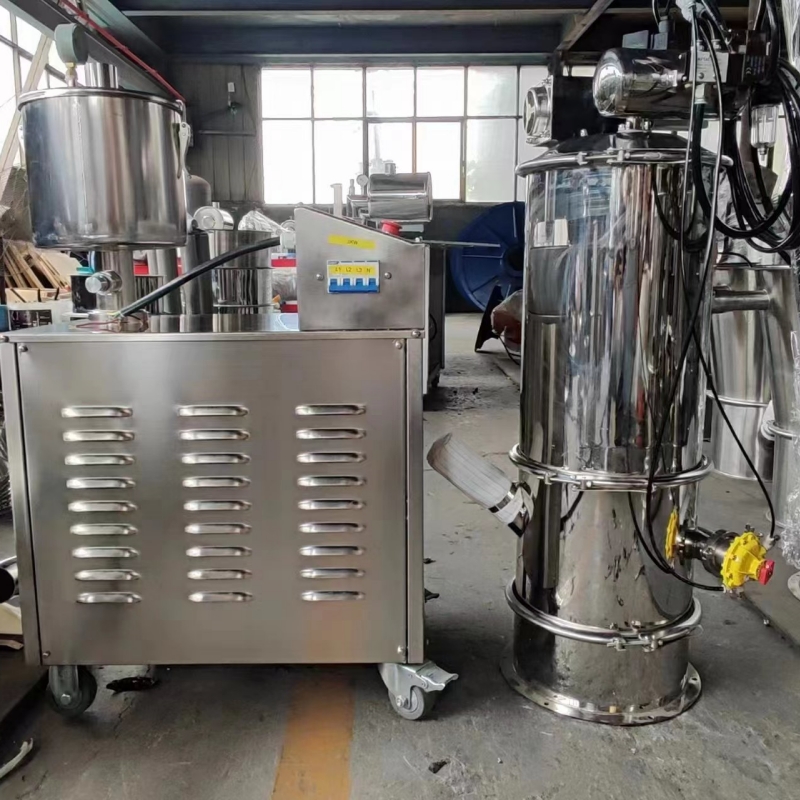
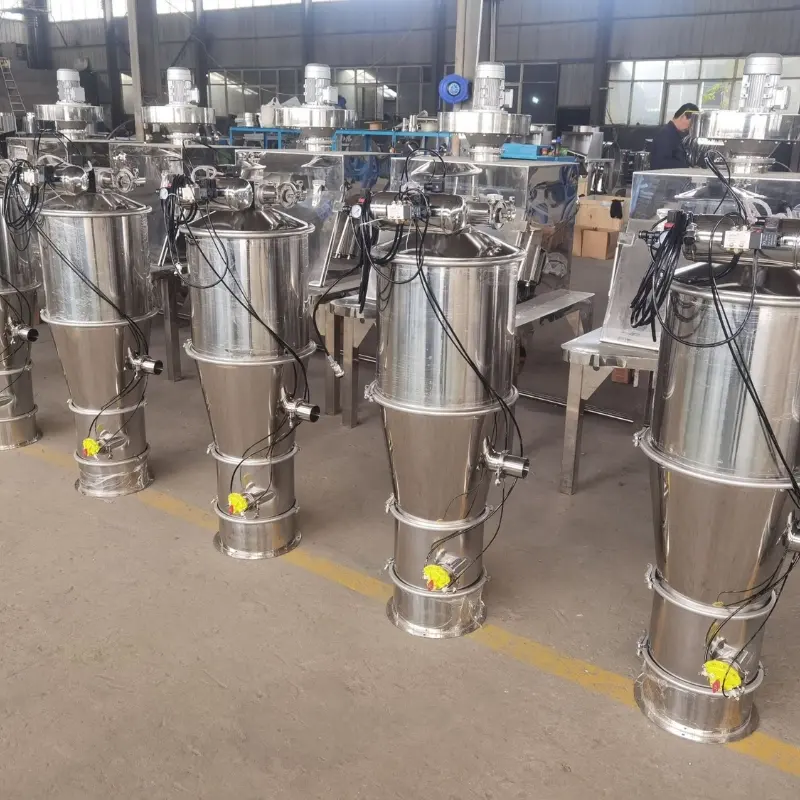
Cuando se trata específicamente de polvos finos, pulverulentos o peligrosos, es esencial contar con equipos especializados. Transportadores de vacío para polvo Están diseñadas específicamente para manipular estos materiales complejos. Estas unidades suelen incorporar sistemas de filtración de alta eficiencia para capturar partículas de polvo microscópicas, garantizando un entorno de trabajo seguro y limpio. Además, su diseño totalmente cerrado evita la contaminación del producto por fuentes externas, un requisito fundamental en industrias como la farmacéutica y la alimentaria. El diseño de estas cintas transportadoras también se centra en facilitar su desmontaje y limpieza para permitir cambios rápidos entre diferentes productos.
Ventajas de utilizar sistemas de vacío
La adopción de un sistema de transporte por vacío ofrece numerosas ventajas sobre los métodos de manipulación manual o de transporte mecánico.
1. Funcionamiento sin polvo y mayor seguridad.
Quizás la ventaja más significativa sea la eliminación del polvo. Dado que el sistema funciona a presión negativa, cualquier fuga en la tubería provoca la entrada de aire, no la salida de polvo. Esto crea un entorno de trabajo más seguro y saludable, reduce el riesgo de explosiones de polvo y minimiza las tareas de limpieza.
2. Higiene y prevención de la contaminación
El diseño cerrado protege el material de los contaminantes ambientales, lo que hace que el transporte por vacío sea ideal para aplicaciones que requieren higiene estricta. Los sistemas pueden fabricarse en acero inoxidable de alta calidad con acabados pulidos para cumplir con las normas sanitarias y de la FDA.
3. Manipulación cuidadosa
En particular, al utilizar el transporte por fase densa, los sistemas de vacío manipulan los materiales delicados con cuidado. Las bajas velocidades minimizan la rotura de partículas, lo que garantiza la integridad del producto final.
4. Eficiencia y flexibilidad del espacio
Las tuberías de vacío pueden instalarse vertical u horizontalmente, y sortear obstáculos, lo que ofrece una gran flexibilidad en el diseño de la planta. Requieren mucho menos espacio que los transportadores mecánicos, como los elevadores de cangilones o las cintas transportadoras.
5. Reducción de la mano de obra y aumento de la automatización.
La automatización del proceso de transferencia de materiales reduce la necesidad de levantar y transportar manualmente, mitigando los riesgos ergonómicos para los operarios y optimizando el flujo de trabajo general de la producción. Impresionante Las soluciones de ingeniería suelen centrarse en integrar estos sistemas automatizados de forma perfecta en las líneas de producción existentes.
Aplicaciones industriales
Los sistemas de transporte por vacío son versátiles y encuentran aplicaciones en un amplio espectro de industrias.
| Industria | Materiales típicos transportados | Requisitos clave |
|---|---|---|
| productos farmacéuticos | Ingredientes farmacéuticos activos (API), excipientes, polvos de relleno de cápsulas | Alta higiene, contención total, fácil limpieza (CIP/WIP), dosificación precisa. |
| Alimentos y bebidas | Harina, azúcar, especias, granos de café, leche en polvo, aditivos | Diseño sanitario, cumplimiento con la normativa de la FDA, manipulación cuidadosa para evitar su degradación. |
| productos químicos | Detergentes en polvo, pigmentos, negro de humo, productos químicos tóxicos o peligrosos. | Funcionamiento hermético al polvo, protección contra explosiones (ATEX) y manipulación de materiales abrasivos. |
| Plásticos y caucho | Gránulos de plástico, polvos de resina, ingredientes para compuestos | Transferencia fiable, evitando la segregación de materiales y gestionando grandes volúmenes. |
Por ejemplo, al transferir compuestos químicos sensibles, la contención que proporciona un sistema de vacío es indispensable. Del mismo modo, la industria alimentaria depende en gran medida de estos sistemas para mantener condiciones sanitarias al mover grandes cantidades de ingredientes. La experiencia que ofrecen empresas como Impresionante Garantiza que los sistemas estén adaptados para cumplir con estas estrictas exigencias específicas del sector.
Seleccionar el sistema adecuado
Para elegir el sistema de transporte por vacío adecuado, es necesario comprender a fondo su aplicación específica. Los factores clave a considerar incluyen:
- Características del material: Densidad aparente, tamaño de partícula, fluidez, abrasividad y fragilidad.
- Distancia y tarifa de traslado: ¿Qué distancia debe recorrer el material y cuánto material debe moverse por hora?
- Puntos de recogida y descarga: ¿Cómo se introducirá el material en el sistema y cómo se descargará en los equipos posteriores?
- Requisitos medioambientales y de seguridad: ¿La aplicación requiere diseño sanitario, protección contra explosiones o normas de filtración específicas?
Al evaluar cuidadosamente estos parámetros, puede diseñar un sistema que optimice el rendimiento, garantice la calidad del producto y mejore la eficiencia operativa general. Ya sea que necesite un sistema estándar transportadores de vacío de polvo o una solución diseñada a medida, comprender los fundamentos del transporte por vacío es el primer paso hacia un proceso de fabricación más optimizado. El sistema adecuado, tal vez diseñado con la experiencia de Impresionante, Puede transformar el manejo de materiales, pasando de ser un cuello de botella a una ventaja competitiva.
Preguntas frecuentes (FAQ)
1. ¿Cuál es la diferencia entre un transportador de vacío y un transportador neumático?
“El ”transporte neumático” es un término amplio que abarca tanto los sistemas de vacío (presión negativa) como los de presión (presión positiva). Un transportador de vacío utiliza succión para jalar material a través de una tubería, lo que lo hace ideal para operaciones sin polvo y manejo de materiales sensibles. Un transportador de presión utiliza aire comprimido o gas para empujar material que se suele utilizar para distancias más largas y capacidades mayores, pero que puede ser más propenso a las fugas de polvo.
2. ¿Pueden los sistemas de transporte por vacío manejar materiales húmedos o pegajosos?
En general, el transporte por vacío está diseñado para materiales secos a granel. Si bien algunos sistemas pueden manejar polvos ligeramente cohesivos, los materiales con alto contenido de humedad, pegajosos o propensos a apelmazarse pueden obstruir la tubería, bloquear los filtros y provocar fallas en el sistema. Para sustancias húmedas o pegajosas, generalmente se requiere equipo especializado o métodos de transporte alternativos.
3. ¿Cómo limpio y mantengo un sistema de transporte por vacío?
El mantenimiento y la limpieza dependen en gran medida del diseño del sistema y del material que se manipula. Muchos sistemas modernos, especialmente en la industria alimentaria y farmacéutica, están diseñados para un desmontaje rápido sin herramientas. Los filtros requieren inspección, reemplazo o limpieza periódicos. La limpieza automática por pulsos inversos ayuda a mantener la eficiencia del filtro durante el funcionamiento. Para aplicaciones higiénicas, algunos sistemas incorporan funciones de limpieza in situ (CIP) o lavado in situ (WIP), lo que permite lavar el sistema con líquidos sin necesidad de desmontarlo por completo.