


The Role of Agitators in Twin Screw Gravimetric Feeders for Sticky Materials
Release time: 2026-08-13
Table of Contents
In the complex world of bulk material handling, achieving a consistent, accurate, and reliable flow of product is paramount. When dealing with free-flowing granules or pellets, the task is relatively straightforward. However, the true test of a feeding system arises when processing cohesive, non-free-flowing, and specifically, sticky materials. In these challenging scenarios, the standard equipment often falls short, leading to inconsistent feed rates, process disruptions, and compromised end-product quality.
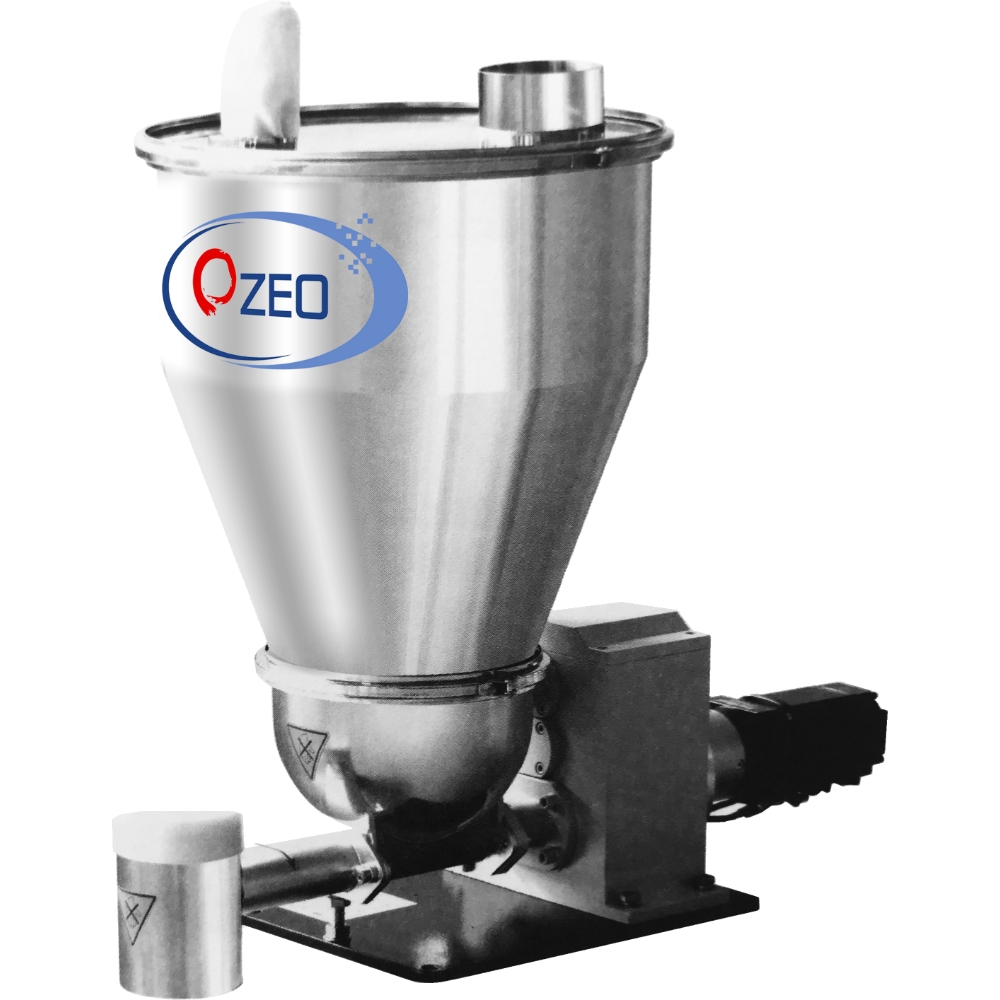
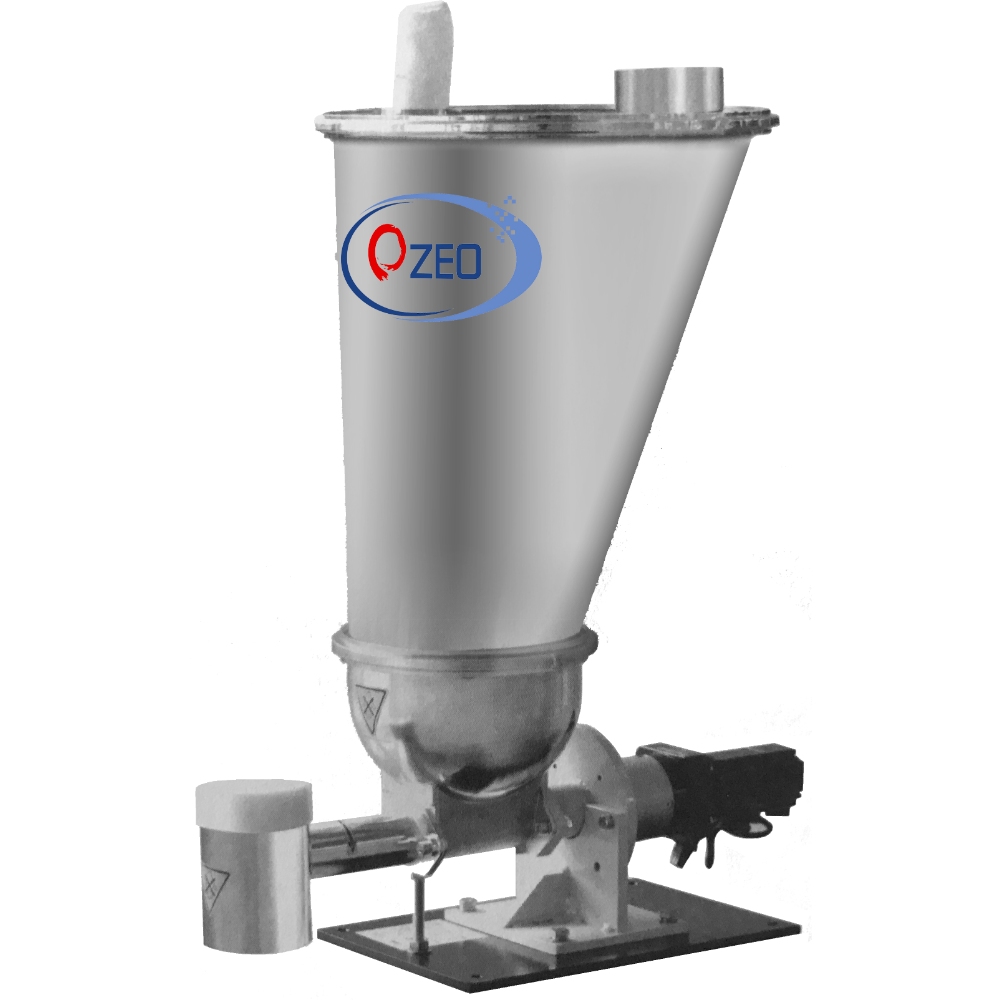
This is where the twin screw gravimetric feeder combined with a specialized agitation system becomes indispensable. This article delves into the critical role that agitators play within a double screw loss in weight feeder, particularly when handling difficult, sticky powders, and how this synergy ensures optimal process control.
The Challenge: Why Sticky Materials Hinder Processing
Before exploring the solutions, it is crucial to understand the problems posed by sticky materials. Materials such as titanium dioxide (TiO2), talc, finely ground calcium carbonate, certain masterbatches, and various food or pharmaceutical active ingredients have high cohesive properties. Their particles tend to stick to each other and to the surfaces of the processing equipment.
When placed into a standard feeder hopper, these materials exhibit several problematic behaviors:
- Bridging (or Arching): The material forms a stable arch or bridge over the discharge opening (above the screws), completely halting the flow. The screws spin empty, leading to a sudden drop in feed rate to zero.
- Rat-Holing (or Core Flow): A central channel forms above the discharge point. While material flows down this central “rat hole,” the bulk of the material remains stagnant along the hopper walls, drastically reducing the active capacity of the hopper and causing erratic feeding as chunks of the stagnant material occasionally collapse into the center.
- Clumping and Agglomeration: Sticky powders can form solid chunks that disrupt the consistent filling of the screw flights.
- Adhesion to Screw Flights: Highly cohesive materials can pack densely onto the screw flights, reducing the active volume of the screw and leading to conveying inefficiencies.
A standard double screw loss in weight feeder utilizes intermeshing screws that provide positive displacement, making it inherently better than single screw feeders for pushing difficult materials forward. However, if the material bridges in the hopper and never reaches the screws, even the best twin-screw design is rendered ineffective. This is where the agitator becomes a critical component.
The Vital Role of Agitators in a Twin Screw Gravimetric Feeder
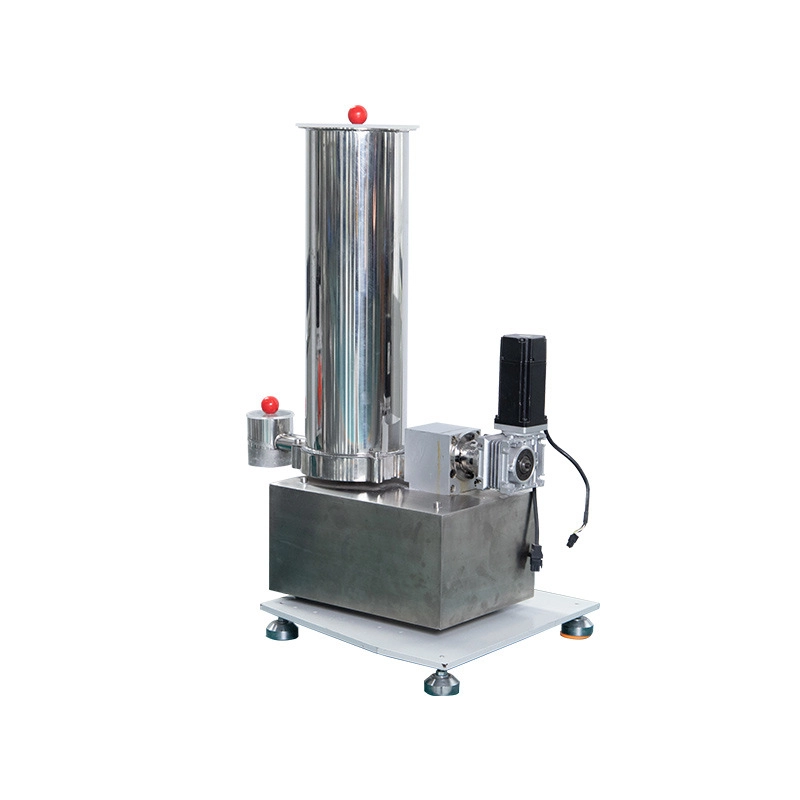
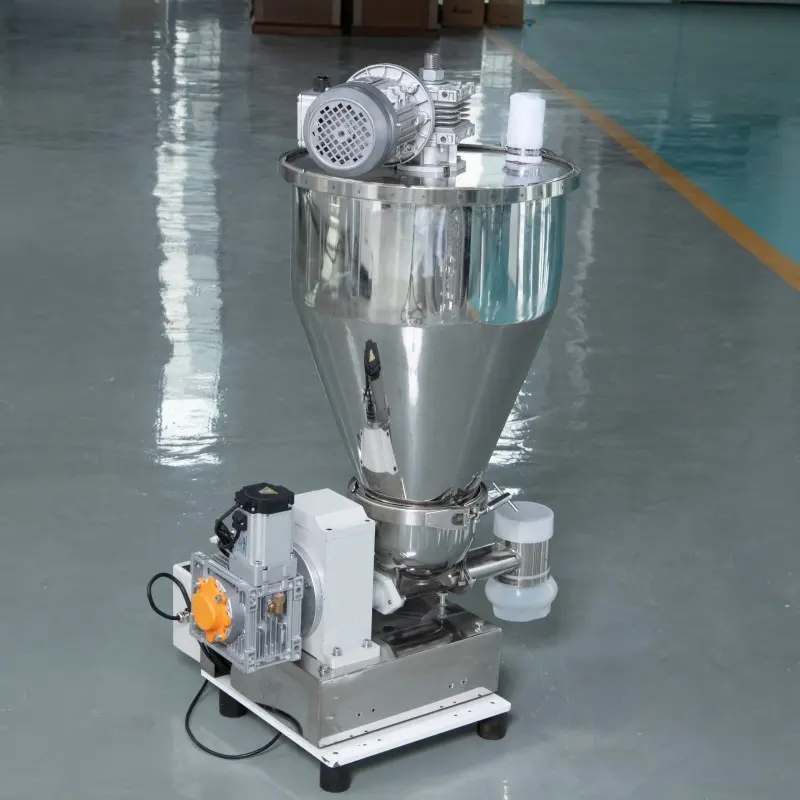
An agitator is a mechanical device located within the feeder hopper, designed to condition the bulk material, keep it in motion, and ensure a continuous, uniform supply of material to the feeding screws below. For sticky materials, the agitator is not an optional accessory; it is the heart of reliable hopper discharge.
The primary functions of an agitator in this context include:
1. Eliminating Bridging and Rat-Holing
The most critical role of the agitator is to physically break down structures that form within the cohesive powder. By sweeping through the lower sections of the hopper, the agitator blades shear the material, preventing the formation of stable arches (bridges) and ensuring that the entire volume of the hopper is active, thereby eliminating rat-holing.
2. Promoting Mass Flow
Mass flow occurs when all the material in the hopper is in motion whenever material is withdrawn from the bottom. This is the ideal flow pattern, ensuring a “first-in, first-out” discharge and preventing stagnation. The mechanical action of the agitator, combined with steep hopper wall designs, forces the sticky material to flow consistently downward toward the twin screws.
3. De-aeration and Densification
Many sticky, fine powders are highly aerated when introduced into the hopper. This trapped air can make the powder behave like a fluid, leading to uncontrolled “flushing” through the screws. A properly designed agitator slowly turns and folds the powder, helping to expel trapped air and stabilize the bulk density of the material before it enters the screws. Consistent bulk density is essential for a twin screw gravimetric feeder to maintain high accuracy.
4. Consistent Screw Filling
To achieve precise gravimetric feeding, the flights (the spiral channels) of the twin screws must be completely and uniformly filled with material at all times. If the hopper flow is erratic, the screw fill will vary, leading to pulsations in the discharge rate. The agitator actively pushes the sticky material down into the feed trough, ensuring the intermeshing screws are optimally and consistently filled, minimizing pulsations and maximizing dosing accuracy.
Types of Agitators for Sticky Materials
Not all agitators are created equal. The design and orientation of the agitator must be carefully selected based on the specific flow characteristics of the sticky powder being handled. The two primary configurations are horizontal and vertical agitators.
Horizontal Agitators
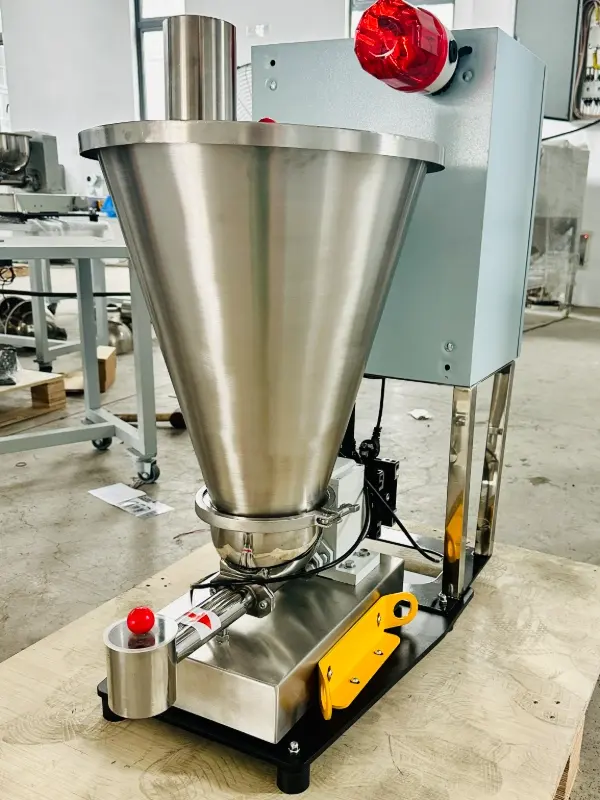
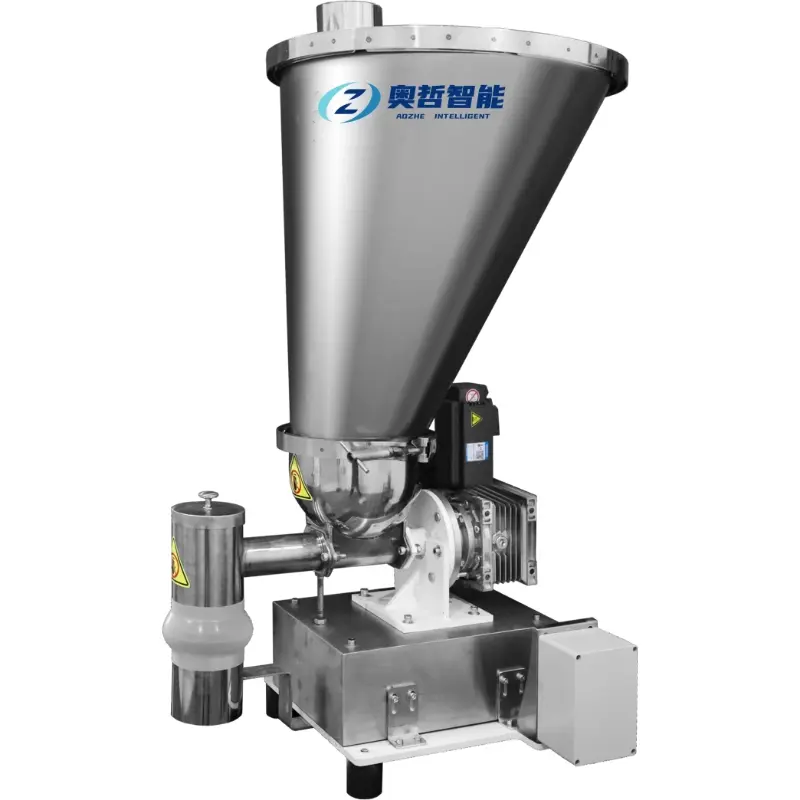
Horizontal agitators are located in the feed trough, situated directly above and parallel to the twin screws.
- Mechanism: They typically feature a shaft with mixing paddles or a ribbon design. As they rotate, they sweep across the entire length of the feed inlet, continuously pushing material down into the screws.
- Benefits for Sticky Materials: Horizontal agitators are highly effective at breaking up small clumps and ensuring that the material doesn’t bridge right at the critical junction where the hopper meets the feed tube. They are often sufficient for moderately sticky or cohesive powders and are commonly integrated into standard twin-screw designs due to their compact nature and effectiveness in maintaining screw fill.
Vertical Agitators
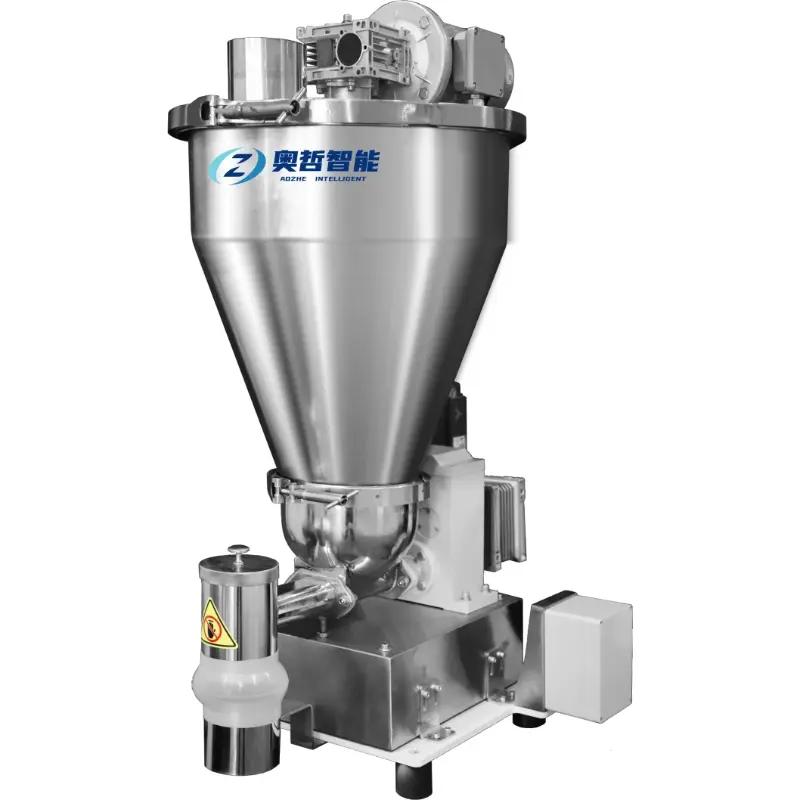
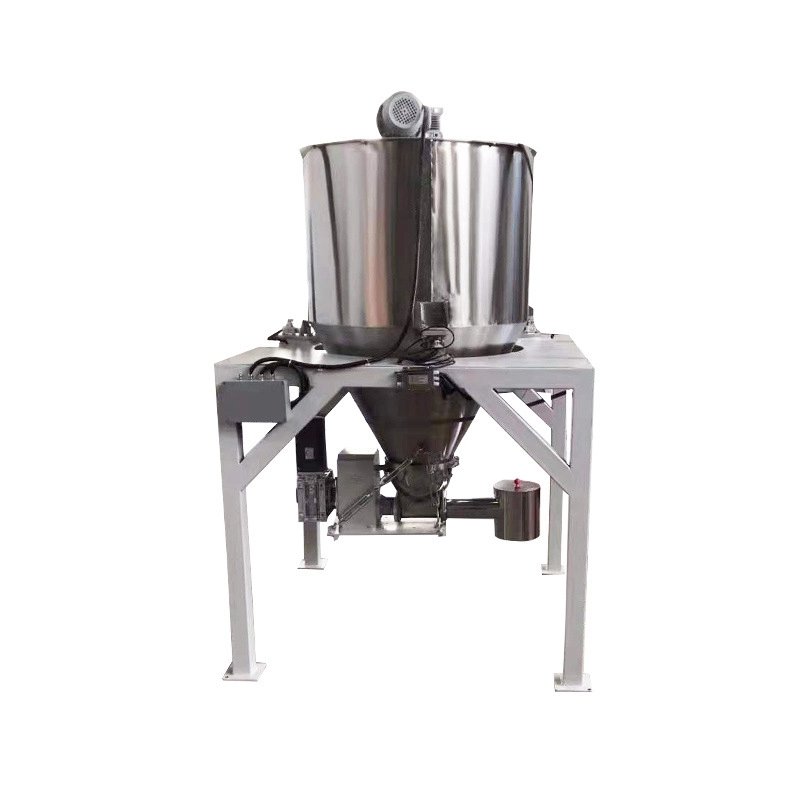
Vertical agitators have a vertical shaft extending down into the hopper from a top-mounted motor, equipped with sweeping arms or blades that contour to the shape of the hopper walls.
- Mechanism: The blades sweep the entire inner surface of the conical or asymmetrical hopper section.
- Benefits for Sticky Materials: For severely sticky, non-free-flowing powders that are highly prone to bridging and rat-holing higher up in the hopper, a vertical agitator is often the most robust solution. By continuously scraping the hopper walls, it ensures absolute mass flow and prevents any material from adhering to the sides. While they add complexity and require a separate drive motor (which adds weight that must be accounted for in the gravimetric weighing system), they are sometimes the only way to reliably handle the most difficult cohesive powders.
Flexible Wall Massaging Hoppers
While not a traditional rotating agitator, flexible wall hoppers serve a similar function. The hopper is made of a flexible polyurethane material, and external mechanical paddles systematically massage or compress the outside of the hopper walls.
- Benefits: This gentle, continuous deformation of the hopper walls breaks bridges and promotes flow without the severe mechanical shear of an internal agitator. This is particularly advantageous for sticky materials that are also highly shear-sensitive or prone to degrading under aggressive mechanical agitation.
The Synergy: Agitation and the Double Screw Configuration
The true magic happens when effective hopper agitation is paired with the positive displacement action of a double screw loss in weight feeder.
- The Agitator’s Job: The agitator’s sole responsibility is to break the cohesive bonds of the sticky powder, ensure mass flow in the hopper, and deliver a consistently dense, uniform volume of material to the screws.
- The Twin Screws’ Job: Once the material is in the screw trough, the intermeshing twin screws take over. Unlike single screws which rely on friction (drag flow), the twin screws create a closed, positive displacement chamber. As they rotate, they physically push the sticky material forward.
- Self-Wiping Action: A crucial feature of intermeshing twin screws for sticky materials is their self-wiping action. The flights of one screw closely intermesh with the flights of the other. As they turn, they constantly scrape each other clean, preventing the sticky powder from packing onto the screws and reducing their conveying capacity.
Without the agitator, the twin screws would run empty due to hopper bridging. Without the twin screws, the agitator would merely pack the sticky material into a single screw, leading to clogging or erratic flow. The combination of these two technologies is what makes the accurate feeding of highly cohesive materials possible.
Comparing Feeder Configurations for Sticky Materials
To summarize the equipment choices when dealing with difficult materials, consider the following table:
| Feature | Single Screw Feeder | Twin Screw Feeder (No Agitator) | Twin Screw Feeder (With Horizontal Agitator) | Twin Screw Feeder (With Vertical Agitator) |
| Ideal Material | Free-flowing granules, pellets | Mildly cohesive powders, poor-flowing granules | Cohesive, moderately sticky powders, pigments | Severely sticky, floodable, or highly cohesive powders |
| Handling of Sticky Material | Very Poor (High risk of clogging/bridging) | Poor to Fair (Dependent on hopper design) | Very Good (Ensures consistent screw fill) | Excellent (Prevents all hopper bridging) |
| Hopper Bridging Risk | High | High | Low | Negligible |
| Conveying Action | Drag flow | Positive displacement, self-wiping | Positive displacement, self-wiping | Positive displacement, self-wiping |
| Cost / Complexity | Low | Moderate | High | Highest |
| Typical Applications | Plastics resin, grains | Starch, moderately cohesive additives | TiO2, talc, sticky food ingredients | Fine cohesive pharmaceuticals, extremely sticky industrial powders |
Gravimetric Control: The Final Piece of the Puzzle
While the mechanical components (agitator and twin screws) ensure material flows consistently out of the feeder, it is the control system that ensures the rate of that flow is precise.
In a loss-in-weight system, the entire feeder assembly (hopper, agitator, screws, and motors) is mounted on high-precision load cells. The controller continuously monitors the weight of the system as material is discharged.
For sticky materials, the gravimetric controller must be highly sophisticated. Even with an agitator, sticky materials can occasionally discharge in tiny pulses rather than a perfectly smooth stream. An advanced controller uses proprietary filtering algorithms to distinguish true weight loss from mechanical noise (such as vibrations from the agitator or the plant environment). By accurately calculating the rate of weight loss, the controller continuously adjusts the speed of the twin screws to maintain the exact desired mass flow rate, compensating for any minor fluctuations in the material’s bulk density caused by its cohesive nature.
Conclusion
Processing sticky, cohesive powders presents significant challenges that standard material handling equipment simply cannot overcome. The combination of a twin screw gravimetric feeder with a carefully selected agitation system provides a robust and reliable solution.
The agitator acts as the crucial first step, breaking down bridges, ensuring mass flow, and continuously feeding a uniform volume of material into the screw trough. The intermeshing twin screws then provide the necessary positive displacement and self-wiping action to convey the difficult material smoothly to the process. By understanding the flow characteristics of your specific material and configuring the feeder with the appropriate horizontal or vertical agitation, manufacturers can achieve exceptional feeding accuracy, maximize uptime, and ensure the consistent quality of their final products, no matter how stubborn the material may be.
Frequently Asked Questions (FAQs)
1. Why can’t I just use a vibrator on the hopper instead of an internal agitator for my sticky powder?
While external vibrators are inexpensive, they are often counterproductive for sticky, cohesive powders. Vibration can actually cause fine, cohesive particles to pack tighter together, worsening the bridge or rat-hole rather than breaking it. An internal agitator provides the necessary mechanical shear to break these bonds and force the material to flow.
2. Does adding an agitator affect the accuracy of the gravimetric weighing system?
Yes, the movement of a mechanical agitator introduces physical forces (torque and vibration) into the weighing system, which the load cells pick up as “noise.” However, modern, high-quality gravimetric controllers use advanced digital filtering technology to identify and isolate this specific mechanical noise, ensuring that it does not affect the calculation of the true weight loss, thereby maintaining high dosing accuracy.
3. If my material is only slightly cohesive, do I need a vertical agitator, or is a horizontal one enough?
For moderately cohesive or slightly sticky materials, a horizontal agitator located in the feed trough is usually sufficient. It effectively sweeps the area right above the screws to ensure consistent filling and prevents localized bridging. Vertical agitators are typically reserved for the most severe cases of highly cohesive, non-free-flowing powders that tend to bridge high up in the main body of the hopper. Performing material flow testing with a reputable equipment manufacturer is the best way to determine the exact configuration needed.