



Loss-in-Weight vs Volumetric Feeder: How to Choose for Plastic Extrusion Lines
Release time: 2026-09-03
Table of Contents
Choosing the right feeder is essential for maintaining stable material flow, consistent product quality, and efficient production in plastic extrusion. Different raw materials can vary in bulk density, particle size, flowability, and other characteristics, which can affect feeding accuracy and production stability.
Two common feeding technologies used in extrusion applications are loss-in-weight feeders and volumetric feeders. Although both are designed to deliver materials to an extruder at a controlled rate, they use different measurement methods and offer different levels of accuracy and process control. Understanding these differences can help manufacturers select the right solution for their extrusion lines.
What Is a Loss-in-Weight Feeder?
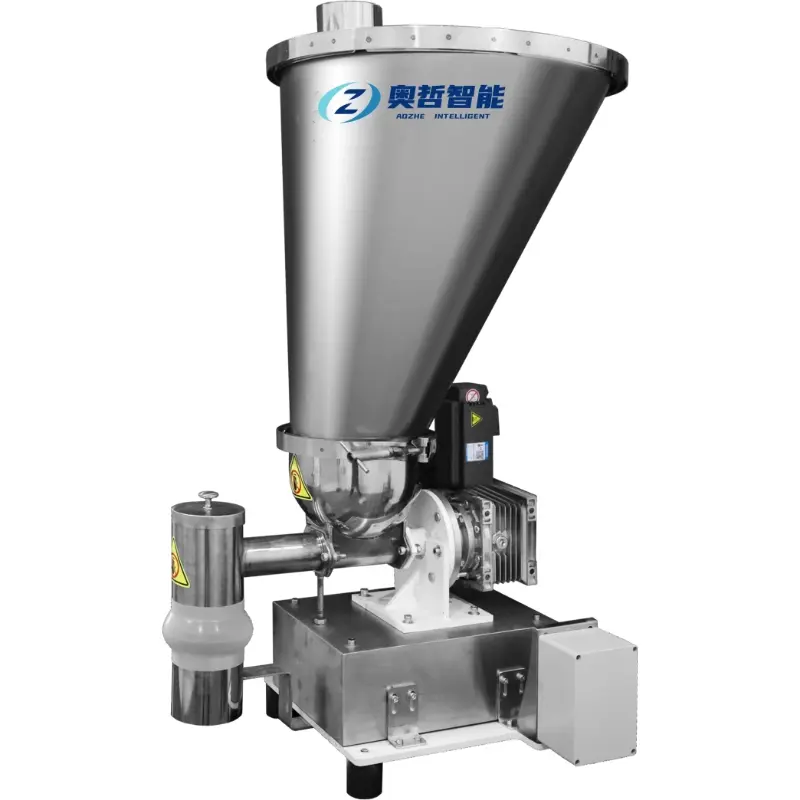
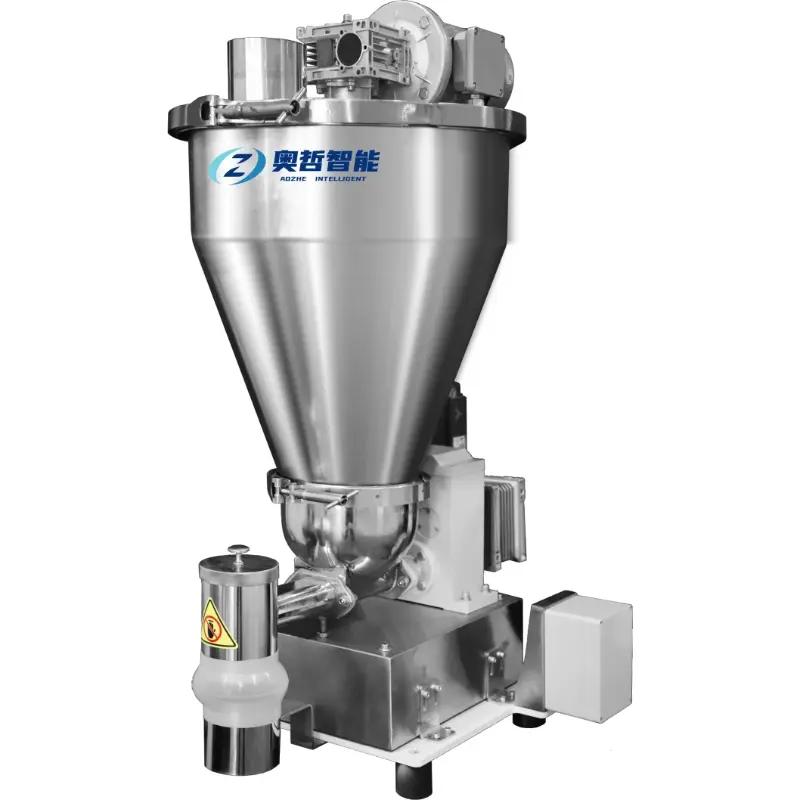
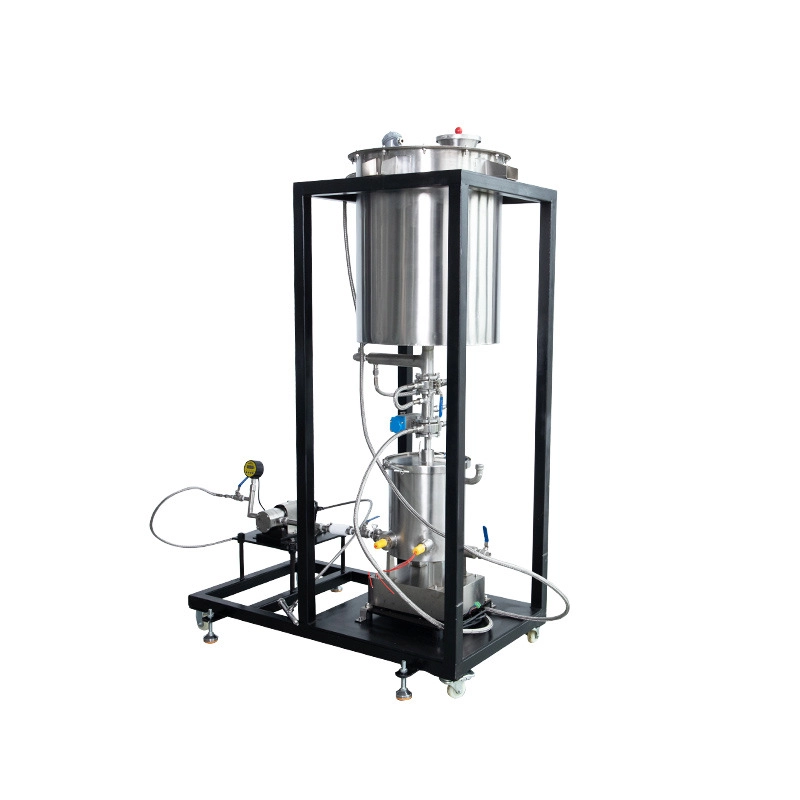
A loss-in-weight feeder measures the amount of material being discharged by continuously monitoring the weight of the hopper and its contents. As material leaves the hopper, the system detects the change in weight and calculates the actual mass flow rate.
Based on this feedback, the feeder automatically adjusts the feeding speed to maintain the target feed rate. This closed-loop control makes loss in weight feeder systems less dependent on changes in material bulk density.
For example, if the density of plastic pellets changes while the feeder is operating, the same screw speed may not deliver exactly the same material weight. A loss-in-weight system can detect this change through its weighing system and compensate by adjusting the feeder speed.
This makes loss-in-weight technology particularly suitable for applications where accurate and consistent material feeding is important.
What Is a Volumetric Feeder?
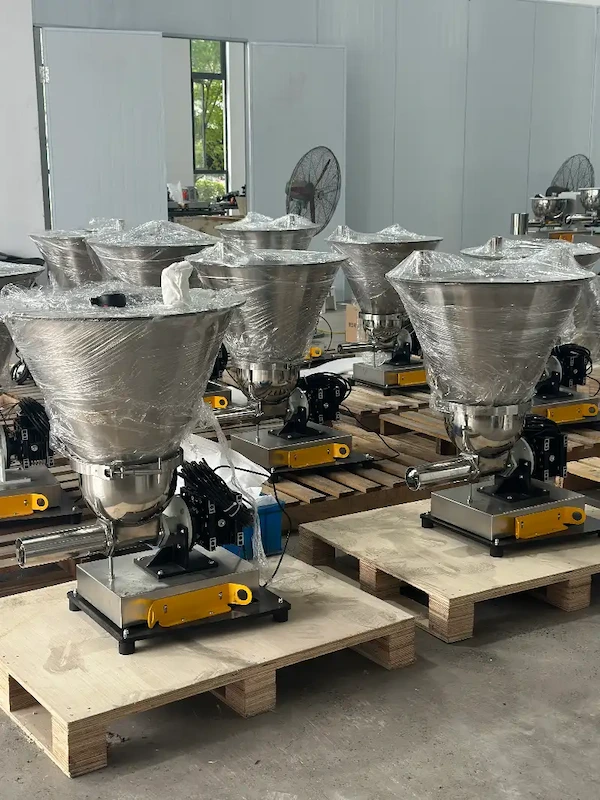
A volumetric feeder controls material delivery according to volume rather than directly measuring the weight of the material being discharged.
The feeding rate is typically controlled by factors such as screw speed, conveyor speed, or the volume displaced by the feeding mechanism. Before operation, the feeder is calibrated to establish a relationship between operating speed and material flow.
Volumetric feeders have a relatively simple operating principle and can be a cost-effective option for many extrusion applications. They are especially suitable when the material has stable flow characteristics and relatively consistent bulk density.
However, because the system does not continuously measure actual material weight, changes in bulk density can affect the actual mass flow rate.
Loss-in-Weight vs Volumetric Feeder: Key Differences
The main difference between the two technologies is how they measure and control material feeding.
| Comparison | Loss-in-Weight Feeder | Volumetric Feeder |
| Measurement method | Measures material weight loss over time | Controls material based on volume and speed |
| Feeding accuracy | Generally higher | Depends more on material consistency |
| Bulk density variation | Can compensate through feedback | Can affect actual mass flow |
| Process control | Closed-loop feedback control | Mainly speed-based control |
| Multi-component formulations | Highly suitable | Suitable for less demanding applications |
| System complexity | Higher | Relatively simple |
| Initial investment | Generally higher | Generally lower |
| Typical applications | Precision extrusion, compounding, masterbatch | Standard extrusion and stable materials |
The choice therefore depends on the requirements of the specific extrusion process rather than simply the equipment price.
When Should You Choose Loss-In-Weight Feeders?
Loss-in-weight feeders are a strong choice when precise and consistent mass flow is required.
They are particularly useful for plastic compounding, masterbatch production, engineering plastics, and other applications involving multiple raw materials. In these processes, even a small change in the proportion of additives, polymers, fillers, or colorants can affect the properties of the finished product.
Material characteristics can also change during production. Variations in bulk density, particle size, or flowability may cause a conventional volumetric feeder to deliver a different material weight at the same operating speed.
A gravimetric feeder addresses this issue by continuously monitoring actual material consumption and adjusting the feeding rate accordingly. This can help improve formulation accuracy, reduce material waste, and maintain more consistent product quality.
When Is a Volumetric Feeder a Better Choice?
A volumetric feeder can be a practical solution when the material properties are relatively stable and the extrusion process does not require extremely precise mass-flow control.
For example, if a production line uses a consistent plastic pellet with minimal changes in bulk density, a properly calibrated volumetric feeder can provide reliable material delivery.
Volumetric systems can also be attractive when equipment simplicity, ease of operation, and lower initial investment are important considerations.
However, manufacturers should regularly check feeder calibration, particularly when changing raw materials or when material characteristics may vary.
How to Choose the Right Feeder for a Plastic Extrusion Line?
When selecting plastic extrusion feeders, manufacturers should evaluate several key factors.
1. Material Characteristics
Consider whether the material is supplied as pellets, powder, flakes, or another bulk solid. Flowability, particle size, moisture content, and bulk density can all affect feeding performance.
2. Required Feeding Accuracy
If the production process requires precise ratios between polymers, additives, fillers, or colorants, a loss-in-weight feeder is generally more suitable.
3. Production Stability
For continuous extrusion processes, maintaining a stable mass flow rate can help reduce fluctuations in product quality. A loss-in-weight feeder can provide continuous feedback and automatic adjustment.
4. Automation Requirements
If the extrusion line needs to communicate with a PLC, centralized batching system, or plant control system, check the feeder’s control and communication capabilities before making a decision.
5. Equipment Budget
Volumetric feeders generally have a simpler structure and lower initial cost. Loss-in-weight systems require weighing and feedback components, but they can provide greater control for high-precision applications.
Make the Right Choice for Your Extrusion Process
There is no single feeder solution that is ideal for every plastic extrusion application. Volumetric feeders can be suitable for stable materials and less demanding feeding requirements, while loss-in-weight feeders are better suited to applications requiring accurate mass flow, precise formulations, and automated process control.
For manufacturers looking to improve feeding consistency and maintain tighter control over material ratios, a loss in weight feeder system can provide an effective solution for modern extrusion processes.
Awesome Intelligent provides industrial feeding and weighing solutions for plastic extrusion and other processing applications. Its loss-in-weight feeders are designed to support accurate, stable, and automated material feeding based on different production requirements. By selecting the appropriate feeder configuration according to material characteristics, throughput, and process accuracy, manufacturers can build a more reliable and efficient extrusion feeding system.