









What Should You Check Before Loss‑in‑Weight Feeder Container Shipment? Quality Inspection & Packaging Standards for Overseas Buyers
Release time: 2026-09-10
Table of Contents
When you’re importing a loss in weight feeder from an overseas supplier, the moment the container doors close is the point of no return. Any oversight before shipment can lead to costly delays, damaged equipment, or performance issues once the machine arrives at your plant. For international buyers relying on a loss in weight feeder manufacturer to deliver precision dosing equipment across continents, a thorough pre-shipment inspection isn’t optional—it’s essential.
This guide walks you through the critical checkpoints you should verify before your gravimetric feeding system leaves the factory, covering quality inspection protocols, packaging standards, and documentation requirements that protect your investment during ocean freight.
Why Pre‑Shipment Inspection Matters for Loss‑in‑Weight Feeders
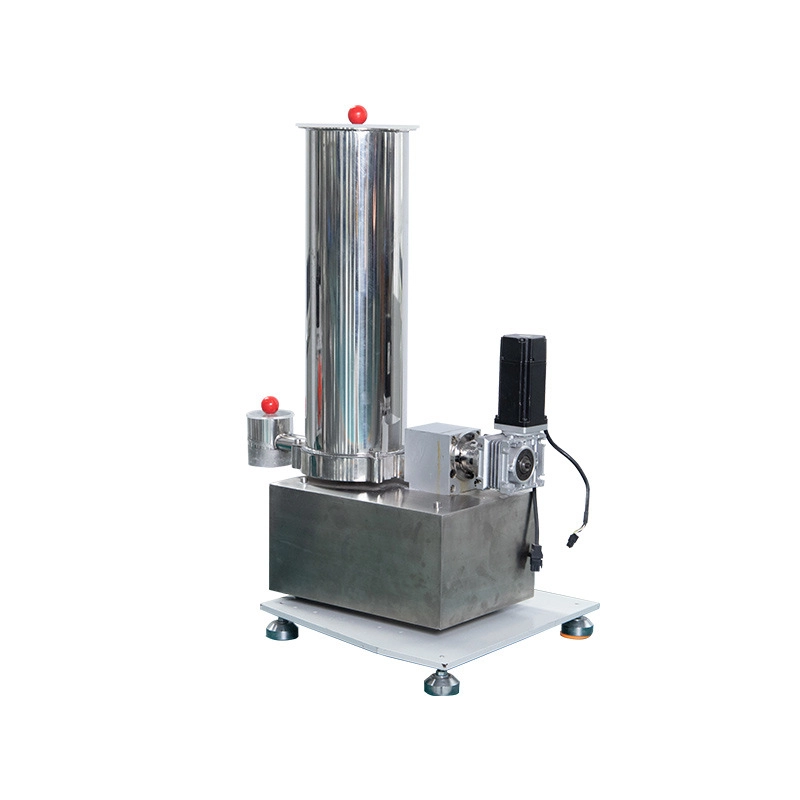
Unlike standard mechanical equipment, a loss in weight feeder system combines high-precision load cells, sensitive electronics, and precisely machined screw components. Even minor impacts, moisture exposure, or improper securing during transit can compromise calibration accuracy or cause component failure.
Overseas buyers face additional risks:
- Long transit times (30–60 days by sea) increase exposure to humidity and temperature fluctuations
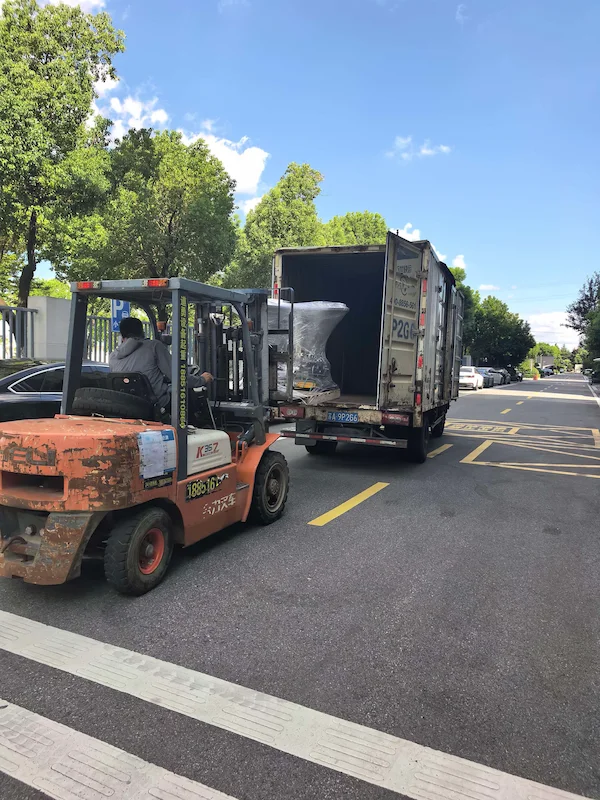
- Multiple handling points (factory → truck → port → vessel → destination port → truck → plant) raise damage probability
- Limited recourse once the container is sealed and shipped
A comprehensive pre-shipment inspection ensures your loss in weight feeder manufacturer has met all quality and packaging standards before the machine is committed to international logistics.
Pre‑Shipment Quality Inspection Checklist
1. Mechanical Assembly & Structural Integrity
Before packaging, every gravimetric feeding system should undergo a complete mechanical inspection:
- Frame and hopper welds: Check for cracks, incomplete welds, or sharp edges that could weaken during vibration
- Screw and barrel alignment: Verify the feeding screw rotates freely without binding; misalignment causes premature wear
- Load cell mounting: Ensure load cells are properly seated and protected; these are the most sensitive components in a loss in weight feeder system
- Fastener torque: All bolts should be torqued to specification and marked with torque seal paint for verification
Request photo documentation of these inspections from your loss in weight feeder manufacturer, especially for load cell areas and screw assemblies.
2. Electrical & Control System Verification
The control cabinet and wiring harness require special attention:
- IP rating compliance: Confirm the electrical enclosure meets the specified IP rating (typically IP54 or higher for industrial environments)
- Wiring organization: All cables should be labeled, secured with cable ties, and routed away from moving parts
- PLC/HMI functionality: Power on the unit and verify the touchscreen interface responds correctly; test all menu navigation
- Communication ports: Check RS485, Ethernet, or Profinet ports for physical damage and proper connector seating
For gravimetric feeding systems destined for hazardous environments, verify explosion-proof certifications (ATEX, IECEx) are documented and physically marked on equipment.
3. Calibration & Performance Testing
This is the most critical inspection for any loss in weight feeder:
- Static calibration: Verify load cell zero point and span calibration using certified test weights
- Dynamic feeding test: Run the feeder at multiple flow rates (minimum 3 points across the operating range) and record actual vs. setpoint deviation
- Accuracy verification: Confirm the system meets the stated accuracy specification (typically ±0.5% or better for quality loss in weight feeder systems)
- Alarm simulation: Trigger low-level, motor overload, and communication fault alarms to ensure proper response
Ask your loss in weight feeder manufacturer to provide a signed calibration certificate with test data, including date, technician name, and equipment serial numbers.
4. Surface Finish & Corrosion Protection
Overseas shipment exposes equipment to salt air and high humidity:
- Paint thickness: Verify powder coating or paint meets minimum thickness specifications (usually 60–80 microns)
- Stainless steel passivation: For food or pharmaceutical grade gravimetric feeding systems, confirm electropolishing or passivation has been performed
- Rust prevention: Check that all bare metal surfaces have anti-corrosion oil or VCI (vapor corrosion inhibitor) treatment applied
- Nameplate legibility: Ensure all warning labels, capacity plates, and certification marks are securely attached and readable
Packaging Standards for Ocean Freight
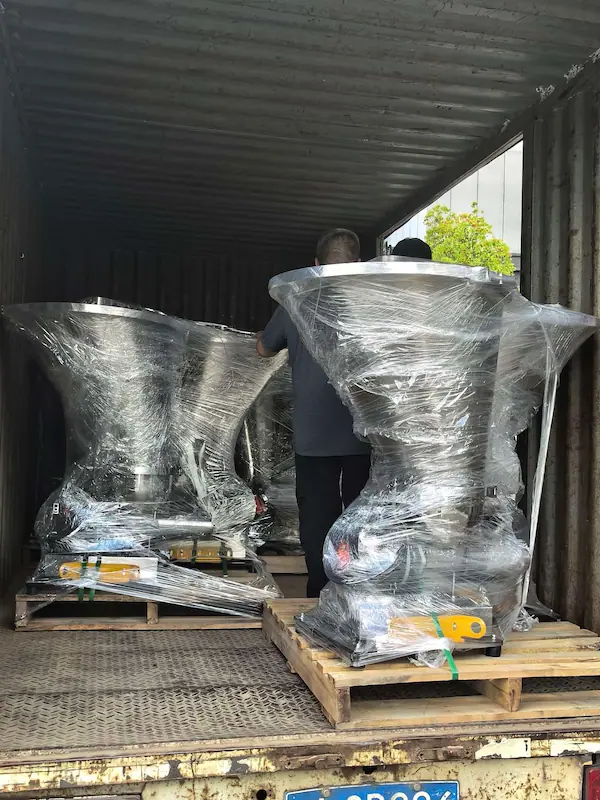
Even a perfectly inspected loss in weight feeder system can be damaged by inadequate packaging. Here’s what to require from your loss in weight feeder manufacturer:
1. Crating & Securing
- Export-grade wooden crate: Use fumigation-compliant plywood or solid wood crates meeting ISPM 15 standards for international shipment
- Internal bracing: The feeder should be bolted to a wooden base frame inside the crate; never allow equipment to rest loosely on the crate floor
- Shock absorption: Install rubber pads or foam blocks between the machine base and crate floor to absorb vibration during transit
- Moisture barrier: Wrap the entire unit in VCI plastic or aluminum foil laminate before crating; include 2–4 desiccant bags (500g each) inside the crate
2. Component Protection
Specific components need extra protection:
- Load cells: Remove and pack separately in anti-static bags with foam inserts if the feeder design allows; otherwise, install mechanical load cell locks
- Touchscreen HMI: Cover with protective film and install a rigid cardboard or foam shield over the display area
- Protruding parts: Remove or securely brace any protruding components (inlet flanges, discharge spouts) that could snap off during handling
- Spare parts kit: Pack spare screws, seals, and small components in a labeled box secured inside the main crate (not loose)
3. External Marking & Documentation
The outside of the crate should clearly display:
- Handling symbols: “This Side Up,” “Fragile,” “Keep Dry,” and “Center of Gravity” markings per ISO 780 standards
- Product information: Model number, serial number, gross weight, and dimensions
- Destination details: Consignee name, port of discharge, and final delivery address
- Packing list: Attach a waterproof envelope containing the commercial invoice, packing list, and inspection certificate
For gravimetric feeding systems with separate control cabinets, ship the cabinet in its own crate with matching identification numbers.
Documentation You Must Receive Before Shipment
Never approve container loading until you have received and verified these documents from your loss in weight feeder manufacturer:
| Document | Purpose |
|---|---|
| Proforma Invoice | Confirms order details, pricing, and payment terms |
| Commercial Invoice | Required for customs clearance at destination |
| Packing List | Itemizes all contents of each crate with weights and dimensions |
| Bill of Lading (draft) | Verify consignee, notify party, and port details before final issuance |
| Certificate of Origin | May be required for preferential tariff treatment |
| Calibration Certificate | Proves the loss in weight feeder system was tested and meets accuracy specs |
| Inspection Report | Documents pre-shipment quality checks with photos |
| Operation Manual | Should be packed inside the crate and sent as PDF in advance |
| Warranty Certificate | Confirms warranty terms and claim procedures |
For gravimetric feeding systems going to regulated industries (food, pharma), also request material certificates (3.1B for stainless steel) and compliance declarations (CE, FDA contact compliance).
Third‑Party Inspection: When to Hire an Independent Inspector
For high-value orders or first-time purchases from a loss in weight feeder manufacturer, consider hiring a third-party inspection company (SGS, Bureau Veritas, Intertek) to conduct a Pre-Shipment Inspection (PSI). Typical PSI scope includes:
- Visual inspection of workmanship and finish
- Dimensional verification against approved drawings
- Functional testing of all operating modes
- Packaging and marking verification
- Random measurement of critical components
The cost (typically USD 300–500 per day) is minor compared to the risk of receiving a damaged or non-conforming loss in weight feeder system.
Red Flags to Watch For
Be cautious if your loss in weight feeder manufacturer:
- Refuses to provide pre-shipment photos or inspection reports
- Rushes you to approve shipment without documentation review
- Uses inadequate packaging (thin cardboard, no internal bracing, no moisture protection)
- Cannot produce calibration certificates or test data
- Has no experience exporting gravimetric feeding systems to your region
These are warning signs that quality control may be compromised.
Final Approval: The Container Loading Checkpoint
Before the container doors close, perform a final verification:
- Container condition: Check for holes, rust, or water stains inside the container; reject if compromised
- Loading method: Ensure crates are loaded with adequate dunnage (air bags or wooden braces) to prevent shifting during transit
- Seal number: Record the container seal number and verify it matches the Bill of Lading
- Photo documentation: Take timestamped photos of the loaded container before sealing
Once the container is sealed, your ability to intervene ends. This final checkpoint is your last opportunity to catch problems.
Protect Your Investment with Rigorous Pre‑Shipment Controls
Importing a loss in weight feeder from an overseas loss in weight feeder manufacturer requires diligence at every stage. By implementing a structured pre-shipment inspection process, verifying packaging standards, and securing complete documentation, you significantly reduce the risk of receiving damaged or non-conforming equipment.
At Awesome Intelligent, we understand that international buyers depend on reliable gravimetric feeding systems to maintain production quality across global operations. Every loss in weight feeder system we ship undergoes rigorous factory acceptance testing, export-grade packaging, and comprehensive documentation review before container loading. Our team works directly with overseas customers to coordinate third-party inspections when needed and provides real-time photo updates throughout the pre-shipment process.
For buyers seeking a trusted loss in weight feeder manufacturer with proven export experience, Awesome Intelligent delivers precision-engineered gravimetric feeding systems that arrive ready for installation and immediate production use. Contact our export team to discuss your project requirements and receive a detailed pre-shipment inspection checklist tailored to your loss in weight feeder order.